Commercial Locksmith in Wichita Falls, TX
Business lockouts, master key systems, exit hardware, door closers and access control, scheduled around your hours rather than ours.
Call (940) 557-5112 and you will be connected with a commercial locksmith professional covering Wichita Falls and Wichita County. Commercial rekeys run $25 to $60 per cylinder. Business lockouts run $90 to $200. Exit device work starts around $250. You get a price range before anyone is dispatched.
Available 24 hours, including before opening on a Sunday and overnight, which is when most commercial work is least disruptive.
Licensed Texas Locksmiths
Available 24/7, Including Sundays
Upfront Pricing, No Surprises
Mobile Service, We Come To You
Most commercial lock problems are cheaper than the business owner expects and more urgent than they think. A door that will not latch is an unlocked door. A key control system nobody can document is not a system. A closer leaking fluid is a next week job that becomes a this week job.
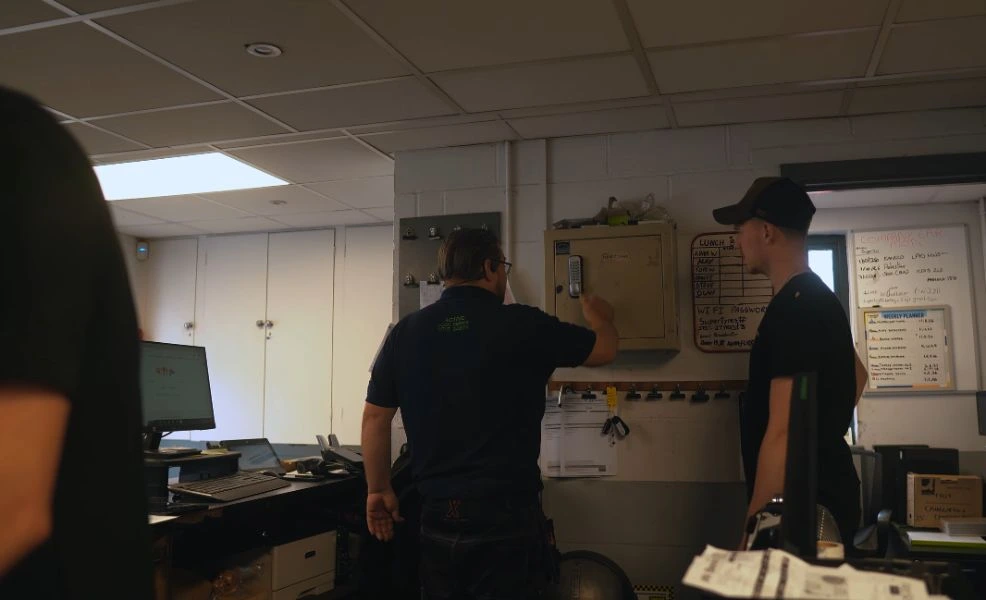
Commercial Locksmith Services for Wichita Falls Businesses
Master Key Systems
Including construction keying for a building still being finished, and restricted keyways where blanks are not sold over a counter.
Rekeying
Per cylinder, for staff turnover, a lost key, or a terminated employee.
Panic Hardware and Exit Devices
Rim, mortise, vertical rod and narrow stile, from Von Duprin, Detex, Falcon and Precision.
Door Closers
Adjusted, rebuilt or replaced, including doors that slam and doors that stop short of latching.
Mortise and Cylindrical Lever Hardware
From Schlage, Sargent, Best, Falcon and Corbin Russwin.
Electronic Access Control
Keypads, fobs, card readers, magnetic locks, electric strikes and request to exit devices.
Aluminium Storefront Doors
Adams Rite hardware, pivots and deadlatches.
High Security Cylinders
Medeco, Mul-T-Lock and similar, with key control paperwork.
Business Lockouts
Usually before opening rather than after closing.
Safes
Opening, combination changes and lock repair.
File Cabinet, Desk, Locker and Cash Drawer Locks
Master Key Systems and Key Control
Most businesses that call about locks are really calling about a key control problem.
The test is simple. Can you say, today, who holds a key to every locked room in your building? If not, you do not have key control, you have a pile of keys and a hope.
What a master key system does. Each person gets one key that opens only the doors their job needs. A supervisor key opens a department. A master key opens everything. The cylinder pinning does the work, so nobody carries a ring of twelve keys and nobody gets access they should not have.
Why restricted keyways matter more than the master system itself. A standard keyway like Kwikset or Schlage Classic can be copied at any hardware counter for a few dollars, which means your key control lasts exactly as long as everyone’s goodwill. A restricted keyway uses blanks that are only sold to the licensed locksmith holding the key control card for your system. When a departing employee wants a copy, there is nowhere to get one.
Key control paperwork. A properly run system comes with a bitting list, a key issue log, and an authorisation list naming who can order keys. That is the part that makes an audit survivable, and it is the part most systems in this town do not have.
When a system needs rebuilding rather than extending. If the original bitting list was lost, if keys have been cut on the fly for years without records, or if the master key has been copied an unknown number of times, extending it just extends the problem. Sometimes the honest answer is a new system, and you should be told that plainly with the cost of both options.
Exit Hardware, Fire Doors and Code Compliance
This is the part of commercial locksmithing where getting it wrong has consequences beyond a repair bill, and it is the section no competitor serving this city has written properly.
The principle behind panic hardware. Life safety codes require that certain doors open from the inside with no special knowledge and no key, using a single motion, so that a person leaving during an emergency does not have to work anything out. A push bar satisfies that. A thumbturn above a deadbolt often does not.
Where it is required depends on occupancy type and occupant load under the adopted building and fire codes, and it is stricter for assembly, educational and high hazard occupancies than for a small office. The thresholds in the International Building Code and NFPA 101 are specific, and the code edition in force plus any local amendments decide your case.
Which means the authority having jurisdiction decides, not a locksmith and not a website. For Wichita Falls that is the city Fire Marshal and building inspections. If you are being told a door needs panic hardware, or you are being told it does not, get that confirmed by the AHJ before hardware is ordered. Any locksmith who tells you they can definitively answer a code question over the phone without knowing your occupancy classification and occupant load is guessing.
ADA and operable parts. Door hardware generally has to be operable without tight grasping, pinching or twisting of the wrist, which rules out round knobs on most accessible routes and is why levers, push bars and paddles exist. There are also limits on the force needed to open interior doors and on mounting heights.
The conflict everyone runs into. Security and egress pull against each other. A door that anybody can walk out of is a door a thief can walk out of with your inventory. The resolution is usually hardware selection rather than locking the door, meaning delayed egress where permitted, alarmed exit devices, or door position monitoring. Chaining or padlocking a required exit is the thing that ends businesses, and it is more common in small retail than anyone likes to admit.
Common things found on a walkthrough. An exit device that latches but does not dog properly. A rim device on a door that needed a vertical rod. A closer adjusted so hard the door does not latch. A propped fire door with a wedge under it. None of those cost much to correct and all of them matter.
Door Closers, Because This Is Most of the Call Volume
The unglamorous truth of commercial hardware. Most business door problems are closers and alignment, not locks.
The door slams. Closing speed is set too fast, or the backcheck has failed. Usually an adjustment.
The door stops short and does not latch. Latch speed too slow, spring power too low for the door weight, or the strike is out of alignment. A door that does not latch is not a locked door, no matter what the lock is doing.
The door is hard to pull open. Spring power set too high, which is also an ADA problem on an accessible route. Adjustment, or the wrong closer for the door.
Fluid on the frame or the floor. A closer leaking hydraulic fluid is finished and cannot be adjusted back. Replacement.
The arm is bent or the bracket is pulling out of the frame. Someone has forced the door past its stop, repeatedly. Fix the stop as well as the closer or it happens again.
On a high traffic entrance, a closer is a wear item. Budget for it the way you budget for tyres.
Access Control, and When It Is Worth It
Electronic access control is sold harder than it is explained. Here is the honest comparison.
Mechanical master keying wins when you have a stable staff, a manageable number of doors, no requirement for audit trails, and a limited budget. It has no batteries, no software subscription and no failure mode involving a network outage. It is also the cheaper answer far more often than vendors suggest.
Electronic access control wins when turnover is high, because revoking a credential takes seconds and rekeying a cylinder does not. When you need to know who opened which door at what time, which matters in healthcare, in anything handling controlled substances, and in facilities with compliance obligations. When access needs to vary by time of day. When you have multiple sites.
The hybrid most businesses actually need. Electronic on the perimeter and on a handful of sensitive interior doors, mechanical master keying on everything else. Paying to put a card reader on a supply closet is money spent on the wrong door.
Questions to ask before buying any system. Does it keep working if the network goes down. What happens in a power failure, and does the hardware fail secure or fail safe, and which one does your fire code require on that door. Is there an ongoing software or cloud fee. Who owns the credential data. Can a different contractor service it, or are you locked to one vendor forever.
That last question is the one people wish they had asked.
The Day You Terminate Someone
This is the most time sensitive commercial lock call there is, and it is worth having a plan before you need one.
Same day, not next week. A returned key means nothing, because a standard keyway copies for a few dollars at any hardware counter, and you have no way to know whether it was copied.
What to cover. Every exterior door they had access to. Interior doors for anything sensitive. The alarm code. Electronic credentials, deactivated rather than just collected. Any padlocks on gates, yards and storage. The mailbox. Cash drawer and desk locks if they had them.
The cheaper route. Rekeying cylinders at $25 to $60 each is far less than replacing hardware, and on a restricted keyway system it also guarantees that no copy exists anywhere.
Timing. If you can, schedule the locksmith for the same afternoon and have it done before the end of the day. If the separation is contentious, do it before the conversation rather than after.
What Commercial Locksmith Work Costs in Wichita Falls
Commercial rekey, per cylinder — $25 to $60
Business lockout — $90 to $200
Door closer adjustment — $75 to $150
Door closer supplied and replaced — $250 to $500
Exit device repair or adjustment — $150 to $350
Panic bar supplied and installed, rim device — $400 to $900
Mortise lock repair — $150 to $350
Mortise lockset supplied and installed — $400 to $900
Commercial lever handset installed — $200 to $450
Master key system design and pinning — Quoted per door count
High security cylinder, per door — $90 to $200
Electric strike supplied and installed — $350 to $800
Keypad or card reader per door, installed — $600 to $2,000
Safe opening — $150 to $400
File cabinet or desk lock — $60 to $150
Storefront deadlatch replacement — $250 to $500
Commercial pricing carries more variables than residential. Door material, hardware grade, whether existing prep can be reused, whether the frame needs modification, and access to power for electrified hardware all move the number. Anything beyond a rekey or a closer adjustment should be quoted after a site visit, and the site visit should be free.
Grade matters and it is worth knowing the language. ANSI Grade 1 is commercial heavy duty, Grade 2 is light commercial, Grade 3 is residential. Grade 3 hardware on a door that opens two hundred times a day will fail, and fitting it is either inexperience or a low bid trying to win.
Commercial Work Across Wichita Falls
The building stock here shapes the work, and it is not an office tower market.
Healthcare is the largest employment sector in this metro, close to 15 percent of jobs, anchored by United Regional and Kell West along with a spread of clinics and specialist practices. Medical facilities need audit trails, controlled substance storage, and hardware that survives constant traffic. They also cannot have a door out of service during clinic hours, which is why overnight and Sunday availability matters more here than in most trades.
Manufacturing and industrial, including names like Arconic, Pratt & Whitney and Sealed Air. High cycle doors, gates, yards, tool cribs and restricted keyways. Plant hardware fails from use rather than age.
Downtown, Depot Square and the Ohio Avenue district. Aluminium storefront doors, Adams Rite hardware, deadlatches and pivots, in buildings old enough that the frames have opinions.
The Kell Boulevard, Kemp Boulevard and Call Field Road retail corridors. Storefronts, restaurants and strip centre units, with lockouts clustered before opening.
Schools and campuses, including Wichita Falls ISD and MSU Texas. Classroom function locks, corridor doors and controlled access, all of it scheduled around terms and nearly all of it code sensitive.
Churches and assembly buildings. Occupant load means exit hardware requirements, and these are the buildings where a well meaning volunteer is most likely to have added a deadbolt that should not be there.
Offices and professional practices along Southwest Parkway and around Parker Square.
Warehousing and self storage, where padlocks, hasps and gate hardware are the whole job.
Coverage extends to Burkburnett, Iowa Park, Holliday, Electra, Henrietta and Archer City.
Working With a Facilities Manager or Business Owner
What a commercial buyer needs is different from what a homeowner needs, and most locksmith websites do not acknowledge that.
Scheduling around operations. Work before opening, after closing, or overnight, so a door is not out of service while customers are in the building.
A written quote before work, itemised by door, so it can go through purchasing.
Certificate of insurance provided on request before anyone arrives on site.
Itemised invoicing, by location or by door, for multi site operators and for anyone who has to allocate costs by department.
Account terms available on approved accounts rather than payment at the truck.
A named point of contact and a documented record of what hardware is on which door, so the next call does not start from nothing.
License verification. Texas licenses this trade through the DPS Private Security Bureau under Chapter 1702 of the Occupations Code. Ask for the license number, verify it through the state TOPS system at dps.texas.gov, and keep it on file with the COI.
Commercial Locksmith Questions
Most Commercial Lock Problems Are Cheaper Than You Think
Call (940) 557-5112, describe the building and the doors, and you get a range or a free site visit depending on the work. Scheduled around your hours, including before opening and overnight.
Available 24/7, including Sundays — Central Time.
Related pages: Lock change and rekey · Lock repair · Emergency locksmith, 24 hours · Safe and security services · Our Services